Wednesday, September 17, 2025

Surveys, symbolism, and strategy: fans protests are needed but should be handled with care

There's still an opportunity for change but be careful not to overestimate support 

Anyone who's ever read this blog knows that a theme of roughly 20 years has been disquiet with the Lawwell-Desmond model of club ownership and the consequent lack of ambition.

I honestly can't remember exactly when I started swimming largely against the tide saying that this board’s vision was one of keeping a nose above the Ibrox entities.

It was considered eccentric by many but I smelt a rat fairly early on. Recently, I reposted articles I published from 16 years ago.

Now, I'm well aware that self-referencing is one of the most annoying forms of pomposity. But, back then, you could draw a lot of flak from the “Celtic family” for saying that you didn't find things hunky-dory - and that we were being led, inexorably, to where we find ourselves in 2025.

Being a voice crying out in the wilderness isn't always a lot of fun and there have been those, over the years, who would cheerfully have seen my head on a silver platter.

I can't even remember when I first had that sinking feeling of tumbling to the fact that we were being told conflicting stories by two little birdies - one called Peter and one called Paul.

One incident that stands out was the unexpected elimination of Rangers from the Champions League by FC Kaunas of Lithuania. (2008/9 - I had to look that up.)

It hit me particularly hard because we had been led to believe that Celtic were preparing to invest significantly in the squad, for our own Champions League challenge. (We were drawn against Man Utd, Villarreal and Aalborg.)

But, that Rangers result had barely sunk in when a blog considered close to Peter Lawwell changed the narrative, espousing the benefits of cash in the bank.

No mainstream outlet had wind of this and it had to be either wild speculation or informed from the only authoritative source itself.

It was of profound significance. We were touting plans to compete with Rangers, based on us both having Champions League income. When Celtic were guaranteed the entire pot allocated to Scotland, it would allow us an exciting opportunity.

The blogger was right - we banked the cash, finished fourth behind Aalborg and a policy direction was made blindingly and painfully clear.

That UEFA Cup Final defeat to Porto in 2003 really had been the watershed some claimed. Brian Quinn and his fellow directors had decided that the spending model had to change - and the fans had to be cajoled into acquiescence.

The intervening years have only vindicated being an outlier while others saw Celtic as a cash cow or a means of gaining a profile.

But we are where we are and a significant proportion of Celtic supporters now see that inaction will only guarantee decades more of emotional ping-pong - feeling that we're going somewhere only to be cut down to size by our own shareholders and directors.

That's great but it's also vital to seize on a wave of popular opinion without the missteps that will condemn any efforts to failure.

When supporters feel shut out by the boardroom, it’s natural to look for ways to make their voices heard. Consultation, protest, and fan media are all part of that. But if we want to be effective, we need to recognise the traps – and avoid the kind of missteps that can weaken rather than strengthen our case.

The recent fans’ consultation is a case in point. The intentions were good, but the execution was rushed through.

Attitudes research is a sophisticated process. There are known pitfalls that are not always immediately obvious and that can lead to significant error. I remember being at a meeting when a senior figure, who had commissioned a survey, gleefully called in representatives of every department to announce that the results had fully supported his preferences. 

Anyone with a smidgeon of knowledge of statistical analysis could see that the results had been distilled to convince the man who paid the piper that the survey had echoed his tune. The result was a disaster, convincing him to commit to an expensive path that was unsupported by the actual data.

The Celtic fans’ survey was a good idea but the execution was sub-optimal, leaving too much room for bias. Almost every question was framed as “Do you agree with/would you support X?” with yes/no boxes. That leaves itself open to what's known as acquiescence bias – people are more likely to say “yes” simply because of the way the question is asked.

Additionally, there was no vetting of the respondents. That's not a criticism of the organisers – it's virtually impossible to have an open survey with control over who responds.

However, it does need to be factored in. With surveys such as this, those with the strongest feelings will typically dominate the respondents, skewing answers to the more extreme end of the scale.

That's only one issue. Another is the fact that there's a likelihood that a significant number of responses could potentially come from rival fans, set on sabotaging the results through supporting the most disruptive proposals.

This happens, to some extent, with virtually every survey involving polarising issues and it would have been wise to take that into account before claiming more than 90 percent support for every proposal.

The obvious outcome was numbers that looked far stronger than they were.

Headlines of “90%+ support” gave the impression of a mandate. But when the first protest – the late entry at Rugby Park– took place, around a quarter of fans refused to join in. Others voiced their disquiet online and in the stands. What looked like overwhelming unity in theory quickly turned out to be fragmented in practice.

Potentially worse was the fact that the protest sparked angry comments about not supporting the team and about the makeup and conduct of the away support.

This is why we should be wary of rushing in. A movement built on a misunderstanding of survey data risks its credibility and carries the risk of future unpleasant surprises.

It's far better to take the time to test the ground properly, refine the strategy, and build a consensus that will hold up under scrutiny. 

SurveyMonkey’s own guidance makes the point: avoid leading questions, broaden the answer options, verify your respondents. If we want real legitimacy, that’s the standard we should aim for.

Another area worth reflecting on is fan media. Reducing presence at press conferences or briefings but still keeping some representation achieves little. It sends a half-signal that is neither a real boycott nor genuine engagement. The board barely notices, and supporters see no tangible gain. Symbolic gestures only matter when they’re unmistakable.

So what does work? The blunt truth, as argued here and nauseum, is that boards respond to one thing above all: money. 

Season tickets are prepaid, so there’s no leverage there. European tickets, cups, and away games can make a dent, but they may also split opinion – many supporters won’t stomach walking away from the team itself. That leaves merchandise, matchday spend, Celtic TV, and commercial partnerships.

This is where a united front can be powerful. Refusing to buy official strips, food, or drink is more than symbolic – it dents revenue streams and, rattles sponsors. No commercial partner wants to be associated with declining sales or visible supporter discontent. Pressure from sponsors is a language directors cannot ignore.
Symbolism can still play a role, though. For example, rather than sporting the latest Adidas clobber, perhaps fans could go back to the days of wearing anything green and white that isn’t official merchandise – knitted scarves, homemade hats, gear bought from independent sellers.

It would show support for the team, starve the board of income, and hark back to traditional roots. It would also lend itself to the sort of optics that could draw media attention, without risking team morale.

Just as old songs like “Putting on the agonies, putting on the style” have been revived for nostalgic power, so too could a return to community-made colours strike a chord. It keeps the stands full of colour while sending a clear message: we are Celtic, but we won’t bankroll complacency.

The aims of these protests are sound. No one doubts the frustration with the lack of ambition from the board. But if we want action that matters, it needs to be measured, disciplined, and strategic. 

And some of those who embraced flawed data with excessive enthusiasm could do worse than be open-minded to that fact, if they want success rather than the ability to insist that they were right.

Hasty gestures based on flawed data risk backfiring. Financial pressure, carefully applied and visibly coordinated, offers the best chance of making directors and sponsors listen.

If we take the time to get it right, we don’t just protest – we influence. The opportunity remains – let's watch out for unnecessary knocks.

Sunday, September 14, 2025

Missteps on a road paved with good intentions

The protesters are sincere in their intentions but their late entry is divisive and ill-considered 

The road to meaningful change at Celtic is paved with missteps, and today now supporters’ protest is in danger of turning into yet another one. 

I don’t doubt the sincerity, the passion, or the sense of injustice that drives the majority of people who finally said, “enough is enough”. 

But sincerity without strategy is a blunt instrument, and this latest plan has all the hallmarks of the kind of half-thought gestures that make noise, divide fans, and leave the boardroom untouched.

The “late entry” protest is a textbook example of what happens when you rush to action. Hundreds of people debated scattergun proposals and, instead of distilling the survey feedback - of 38,000 responses - into a handful of well-considered ideas, they reached for the most dramatic gesture. That is not strategy, that is impulse. Unsurprisingly, the backlash has already been significant. Before a ball is even kicked this protest has become an own goal.

It has taken what was arguably the biggest show of fans unity in Celtic’s history, and been met, in many quarters, by frustration, derision and anger. What a start!

On paper it sounds dramatic: no Celtic fans in the ground at kick-off, thousands filing in after twelve minutes. In practice it will be a trickle, managed by stewards and police. 

That ensures friction, it frustrates paying fans, and it gifts the board a perfect alibi. If Celtic put in a lacklustre performance and drop points, the late entry will be blamed. If there is disorder in the stands, it will not be Celtic carrying the can. 

This whole operation will be stewarded by Kilmarnock and Police Scotland, which means if it goes badly wrong the board can wash their hands and point the finger at the organisers. They will look like amateurs while the directors shrug.

Worse still, there is a genuine safety issue. Anyone who remembers the history of Ibrox the Ibrox disaster knows that crowd movement, whether an early exit or a late entry, carries risk. To risk fans and disrupt the team in pursuit of a poorly conceived point is reckless, not radical. That's also why the late entry will not be allowed to happen as the protesters think.

Celtic’s hierarchy themselves are masters of poor communication. For years I have argued that this club does not understand reputation management, public relations, or even basic respect for its own supporters. The White-Kelly era is remembered precisely because it combined arrogance with tone-deafness. 

Yet somehow, elements of the fan movement have stumbled into mimicking the same mistakes: high on gesture, low on strategy, blind to consequences.

And let us not kid ourselves, there is a hierarchy here too. The notion that certain groups can drape banners over seats as if they were towels on sun loungers says it all. For all the rhetoric about unity, the reality is different factions jockeying for influence, with some familiar names seeking status and profile more than progress. 

The Celtic Trust, which many of us warned years ago was not the vehicle for change, now stands exposed. Others, no less pompous in manner, have been quick to fill the vacuum. For almost 20 years we have been here, the same warnings, the same mistakes.

The tragedy is that the Celtic family has the talent to do far better. Among our support are people with the brains, skills and experience to mount a campaign that is coherent, safe and effective. Instead we get decisions made on the hoof, shaped by voices too keen on their own profile to let better ideas come through. The result is division, not unity.

It is not as if there were no smarter options. Ticket boycotts were dismissed because rebels were afraid of losing their places on the waiting list. That would have been a genuine sacrifice. Instead of hard choices we get grandstanding. 

The survey looks like being another squandered opportunity. Poorly designed questions, no proper analysis of qualitative data, and a box-ticking exercise that produced a misleading ninety per cent “approval” figure. It gave the illusion of consensus where none really exists. That was not consultation, it was theatre.

People tick yes to, “Do you agree” or “Would you support” questions. Hence in referenda there are endless debates over the wording of questions and battles over which side of the argument votes Yes.

What could have been done? A properly constituted attitudes survey. Careful analysis. Clear proposals that could be evaluated on safety, strategic, financial, and cultural grounds. Building consensus, not splinter groups. Real communication with fans, not another copy of the board’s arrogance dressed in green and white.

And yet here we are. A protest that risks alienating fellow fans, risks safety in the stands, risks disrupting the team, and all to make a point that will be shrugged off by a board sitting on one hundred million pounds in the bank and more than happy to sell a player if there is any shortfall. That is not pressure. That is indulgence.

The call for change at Celtic is right. The board are culpable. The club’s communication is a disgrace. But until we find a movement with strategy, vision, and respect for the whole support, we are destined to repeat the cycle: loud gestures, fleeting headlines, and another opportunity lost.

Friday, July 18, 2025

Brendan, signings - and the "spectre" of Shaun

There's something oh-so-familiar about this close-season.

It follows a pattern we've come to know well. The team looks shakey - they come good - we start to look like we've got the makings of something with real potential - players become restless - we sell more than we buy (in financial terms) - there's speculation about the manager.

As ever, fans are divided. 

"The board's not backing the boss!"

"We can't invest for a manager who won't commit."

"Why are we hoarding cash in the bank?"

"Do you want us to go bust?"

I've been a Celtic supporter long enough to have become jaded by the whole carousel.

But amid all the angst, the navel-gazing and the infighting, something is going almost unnoticed.
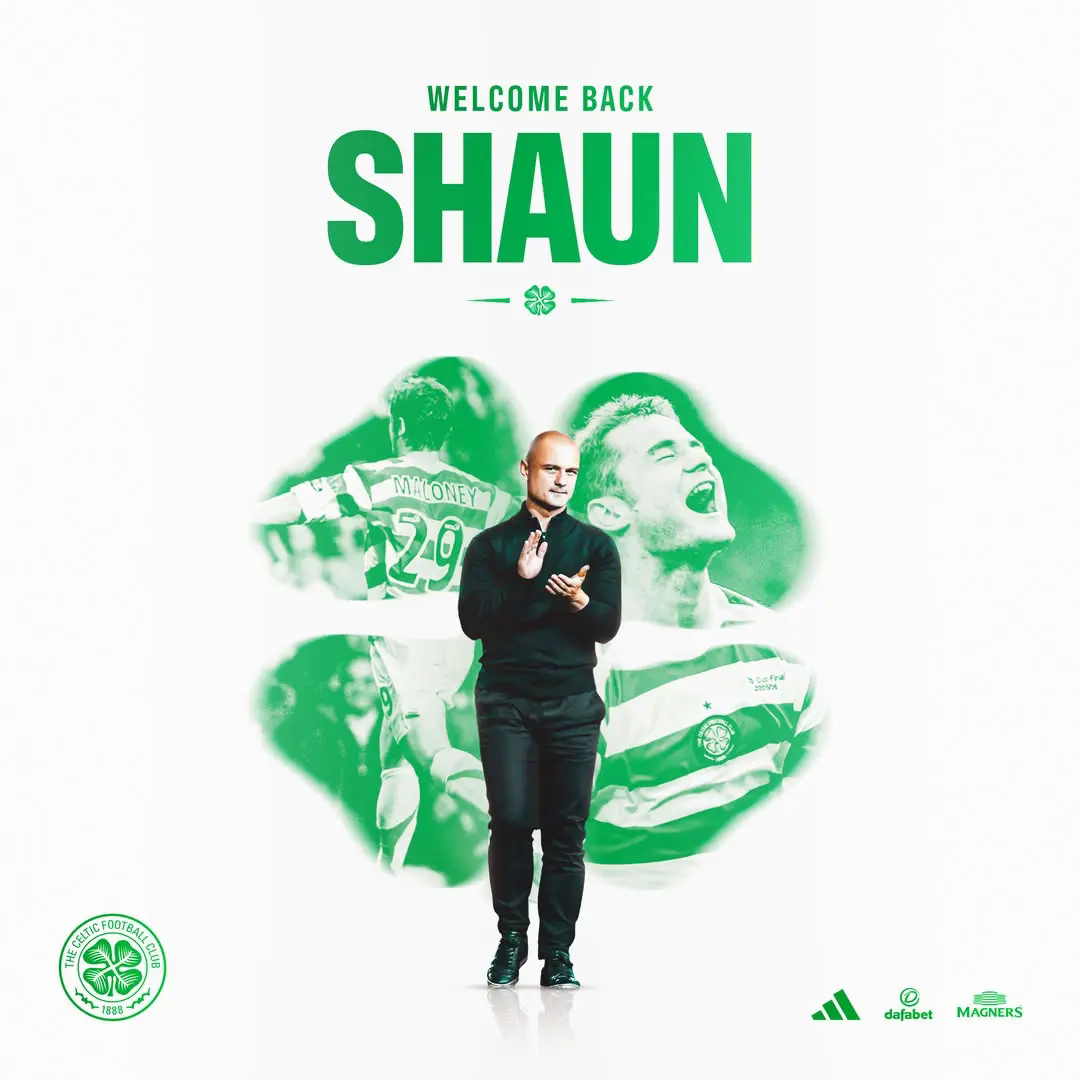
The return of Shaun Maloney.

I'll make it clear that I like Shaun and respect what he has achieved in football. I have nothing whatsoever against him or his appointment as "professional player pathway manager".

And change was evidently needed in that department. In recent years, Celtic's youth development has been like a production line with nobody to man the end of the conveyor belt, while talent was whisked off by opportunistic clubs offering baubles and big dreams.

As with most things, that led to all manner of finger-pointing within the development setup as well as the manager "not giving youth a chance".

That's another conversation but there can be little doubt that Shaun, with his CV including coaching Belgium under Roberto Martinez while the country was ranked 1st in the world, has huge talent and experience to bring to the role.

But are we being told the full story?

This isn't the first time that Celtic have appointed Shaun to a similar role. The previous occasion was in 2017 when the first-team coach was... Brendan Rodgers.

Of course, things were different then. At that time, Peter Lawwell was CEO, not chairman of the board, as he is now.

There are those who will tell you that anyone who thinks the Chairman directly influences policy doesn't understand business.

Those people, in my humble opinion, are either liars or fools. You can forget about the extent and limitations of the remit of an executive role when personal relationships are at play.

Celtic tried an outsider as CEO - Dominic Mackay lasted approximately two months before he left in mysterious circumstances, only for insiders at Celtic to brief against him for failing to take Lawwel's advice in the transfer market.

That caused a ripple of disquiet before Ange started exciting us with some sensational football and issues like club governance seemed too dull to consider.

But Shaun, like John Kennedy and Gavin Strachan, is very much an insider with key members of the board.

Unlike most clubs, the Celtic board have kept an iron grip on the coaching team for years, with the core being board appointees, rather shaped by changing managers.

There can be a lot to be said for the stability that brings, especially with little interest in retaining ambitious managers, but it's also a strategic bargaining chip when dealing with those same head coaches.

It means that replacing the head coach is a relatively simple logistical task and that weakens the hand of someone like Brendan Rodgers, when the prospect of a new contract arises.

I'll come straight out and say it - I believe that's the main reason for Shaun's appointment.

"You want guarantees over quality signings and control over who comes in? Well, we've got alternatives to you already in place."

Many will dismiss this as nonsense but, from a strategic point of view, Celtic have coaching team in place, that could be headed by Shaun "on an interim basis" at the drop of a bunnet.

Add in the prospect of the up-and-coming Ayr United boss Scott Brown or - gawd help us - the ever-available Dunfermline boss Neil Lennon - and you have the sort of continuity options that would require Peter Lawwel to have his sheets changed.

Is that a coincidence, as there are again hints that signings have been brought in without the enthusiastic support of Brendan?

Do key members of the board want him to stay?

All will be revealed by the end of the season but you can be sure that those who refuse to communicate with the fans directly already have their PR ready for when he next "abandons" us.

Imagine starting season 2026-27 with the dream team: Head coach, Shaun Maloney; assistant manager, Scott Brown; team coaches, John Kennedy, Gavin Strachan; Direct of Football, Neil Lennon - all happy to work within the existing recruitment strategy.

The only downside is, of course, that Shaun's forays into management have been less than stellar.

But, of course, should he fail, Scott could step up "on an interim basis", with Neil as "a safe pair of hands".

It all makes perfect corporate sense.

Monday, January 27, 2025

Farewell to Kyogo, welcome back, Jota - and the prodigal son’s return?

Celtic fans are no strangers to the emotional bagatelle that comes with supporting the club. 

This week, however, has been a particularly bittersweet ride. The news of Kyogo’s departure to Stade Rennais has left many of us with a lump in our throats, while the return of Jota from the same club has sparked joy and optimism. 

It’s a strange feeling, akin to welcoming one family member home from abroad, only to watch another pack their bags, perhaps never to return.  

Kyogo’s time at Celtic has been special - at times, nothing short of magical. His energy, relentless work rate and world-class finishing combined with his humility and evident joy in playing in the Hoops to make him an easy player to love - and most of us still do.

Comparisons to Henrik Larsson are not made lightly, but Kyogo’s goals return and range of finishes put him in that rarefied air. He wasn’t just a goal scorer; he was a symbol of Ange Postecoglou’s revolution, a player who embodied the attacking, fearless football that brought excitement, trophies and great memories.  

It’s hard to begrudge Kyogo his move, if that's what he has to do to have a chance of potentially securing a spot in Japan’s World Cup squad.

But, personally, my instinct is that this move might not work out as he hopes. Stade Rennais, having dropped into the relegation places in Ligue 1, have struggled to get the best out of Jota, and their chaotic season doesn’t inspire confidence. We can only wish Kyogo well and hope he finds the success he deserves.  

On the flip side, the return of Jota is giving most of us the warm and fuzzies and feels like an encouraging sign that Celtic are not just a selling club but one capable of attracting players of his quality and price bracket.  

What’s even more impressive is the financial acumen behind the deal. To have made a profit in the region of £8 million over various transactions involving Jota, while still securing his services for five and a half years, is exceptional business. 

However, Jota’s return comes with a caveat. As Callum McGregor often says, there’s “zero credit in the bank.” Jota will need to hit the ground running, proving that he’s not just here to relive past glories but to create new ones. The same applies to Kieran Tierney, should his much-anticipated return materialise.

Speaking of KT, the prospect of his return feels like something that should happen, even if some reasonably question his ability to remain free of injuries. 

For me, like many others, KT never felt like he stopped being “our Bhoy” and if he does come back, it will feel like a longed-for return for a player who was only ever studying away from home.  

Yet, like Jota, Tierney will need to approach his return with the "zero credit " mindset and I have confidence that both can make it work.

The experiences of Jota and KT, along with the recent struggles of Ange Postecoglou at Tottenham, serve as a reminder that life outside Celtic Park isn’t always the promised land. (You can't get greener than Celtic!)

James Forrest has often spoken about ex-teammates who regretted leaving Celtic, and their experiences should serve as a cautionary tale, for all the allure of bigger leagues and bigger paychecks.  

Perhaps the most encouraging takeaway from this transfer window is the growing sense that Celtic are positioning ourselves as a club to come back to, for players in their peak years, rather than a stepping stone to “higher things” or a place to enjoy a pre-retirement sojourn.

There have been false dawns before, but just maybe, there has been a mentality shift and Celtic are on the way up.

Monday, January 06, 2025

Brendan’s shot at Celtic fans was well off-target

There’s an old story — which may or may not be true — about Jock Stein’s attitude to the fans. The tale goes that a game wasn’t going well and Jock had chosen to drop Dixie Deans, much to the disgruntlement of many of the fans.

When Jock finally decided to make a change and told Dixie to warm up, the fans started to chant his name. At that point, it’s said, Jock told Dixie to put his tracksuit back on and sit on the bench — a strong message to the supporters that he, and he alone, decided who would play for Celtic and when.

I was reminded of this by Brendan Rodgers’s decision to berate supporters who chanted for Kieran Tierney during the win against St Mirren.

Brendan usually has his communication spot on, so it was interesting to witness the tetchiness in his response, after a solid win. You can argue that he was simply defending Greg Taylor at a time when he has still not signed the contract extension offered to him, drawing speculation that he may leave Celtic in January or at the end of the season.

Some will say that’s good management; that it’s the job of a manager to publicly support his players when there’s a perceived lack of appreciation from certain quarters. You could say that the message he is sending to the dressing room about having his players’ backs is more important than the signal he sends to supporters.

However, I can’t help feeling that Brendan has called this wrong on a number of levels and has only made a delicate situation worse with his strident comments.

Only recently, Brendan was talking about “narratives” deflecting from victories. Why, he then chose to introduce a negative post-match narrative after a solid recovery, following an abject defeat to The Rangers, only he knows for sure.

Was it partly inspired by petulance, still smarting from the defeat at Ibrox? It seemed a possibility.

Yet Brendan, along with others, has talked about the winning mentality and pressure to perform at Celtic. If fans are often over-the-top with their criticism when let down by the players, perhaps that just goes with modern football.

But Brendan shouldn’t kid himself. The tensions towards Greg have been largely driven by the player and manager themselves.

Greg has an important decision to make and he’s entitled to take his time making it. At 27, he no doubt sees that the likes of Stuart Armstrong, Ryan Christie and Kris Ajer have left Celtic to make excellent money in the English Premier League and probably feels confident that he could make a similar move to a team in the lower half of that competition.

In that sense, Greg probably feels it’s now or never for him. To sign on, I’m guessing that the main considerations are likely to be a long contract near the top of what Celtic can offer within the pay structure and that he will be a major first-team player in what promise to be exciting times ahead.

As well as these factors, is his position in the Scotland squad where he faces fierce competition and will have to be playing regularly if he is to have any chance of featuring in the next World Cup.

These concerns are all quite legitimate but, by the same token, fans tend to get restless when players fail to make the big gestures of loyalty that supporters kid themselves they’d all make in a heartbeat.

And, frankly, that hasn’t been helped by Greg’s form this season, which has been somewhat patchy. That’s something else that can come from a player having other things on their mind and, while understandable, isn’t helping anyone.

Then we come to some of Brendan’s own comments. When asked recently about Greg’s contract situation, Brendan was careful to praise his contribution to the club and emphasise that he would like Greg to stay. However, it can’t have been lost on Greg or his representatives that Brendan continually used the word, “squad”.

Any player with the concerns listed above would surely be concerned that that was code for saying that his position would be diminished in future. Saying this at the same time as the growing speculation around Kieran Tierney’s possible return was unusually tin-eared of a manager who usually prides himself on his diplomacy and media-handling.

Now, Brendan has gone one further and made the narrative around Greg being that it’s him or Kieran — which is not just crass but follysome.

Personally, I’ve always been firmly in the KT camp, though Greg deserves more recognition and appreciation than he has sometimes received. But, with Kieran still to prove that he can get over the injuries that have affected him (and that explosive power he has always carries the risk of some injury recurrence), Celtic may well go into February with a top fullback being managed into performance condition and a loan player while Greg explores pastures new.

That’s largely on Brendan, in my opinion. He  is often eloquent in his managing of sensitive issues. Sometimes, however, the great communicator would be well advised to heed the words of fellow Irishman, Ronan Keating: “You say it best when you say nothing at all.”

Monday, September 09, 2024

Celtic’s future captain? An early prediction — but no pressure, Luke!


Callum will be our captain for years to come but we’ll soon need to prepare a successor

It's the international break, there's no real football, so it's time for nitwits and fools to indulge in idle speculation.

Here I go. Something that's been on my mind recently is who will follow Callum McGregor in taking the captain's armband when Callum finally hangs up his boots.

Hopefully, that's years away but, unlike the last few years of Scott Brown's captaincy, when Callum was the obvious candidate, there are few players who look to be both suitable and likely to be at Celtic in around four years time, when Callum will likely be ready to move on.

Step forward, our new midfield signing, Luke McCowan. Celtic through and through, 26 and with an impressive attitude as his most recent press conference demonstrated, we might just be looking at the man right now.


Now, I’m not saying McCowan’s ready for the captaincy any time soon—he hasn’t even played a full game for Celtic yet—but there’s something about his attitude that makes you wonder.

In his recent press conference, he came across as a player with not only ambition but a solid, grounded mindset. At 26, he’s the right age to grow into a leadership role, and would be around 30 when Callum would likely be winding down so the timing might just align.

Of course, we’re talking about potential, not guarantees. McCowan still has to prove himself on the pitch and show he’s not just a solid squad addition but someone who can inspire and lead.

But the fact that he’s a true Celtic man, combined with his previous captaincy experience at Dundee, makes him a name worth keeping in mind when we look to the future.

It was also notable that Luke left Dundee with the universal good wishes of his club, coaches teammates and fans. That's a rare occurrence and it speaks to a solid character.

Listening to him talking, Brendan Rodgers must have been beaming, as he said everything you expect of a new signing, humble but confident, focussed on working hard, learning from everyone around him and doing whatever it takes to make the most of his opportunity.

There’s always a need to plan for the long-term leadership at Celtic and the captain’s role is more than just wearing the armband; it’s about embodying the spirit of the club, guiding players, and maintaining the standards set by legends like Callum and Scott. 

Greg Taylor might be another candidate, but with McCowan’s age, attitude, and work ethic, he’s certainly one to watch as the years progress.

For a Celtic man at heart, the ultimate reward for Luke could just be the bhoy's own dream.--

Sunday, September 08, 2024

Blood on the screens! Celtic content family goes to war … over what again?

There’s a time to choose your battles and a time to keep your powder dry. Wazzocks, take note!

There's trouble at t'mill! Or at least the Celtic blogging community. By community, I of course mean the those-and-such-as-those content creators who see themselves as inside the tent pissing out, with the sense of self-importance and entitlement that comes with making an income from daily talking the kind of pish that this blog gets around to occasionally.


Any parent will tell you of the risks that the school holidays give idle little hands some devilish work to do and, for Celtic, it seems that the accursed international break is doing the same.

Excuse me while I put down my tiny violin and explain that this is all about - drumroll - the transfer window.

Happy with the window - aye, naw, mibbes?

I have to confess that, as we were doing our usual due dithering, I considered breaking off from my important tasks to write a piece with the working title: “The Celtic transfer window — the annual betrayal”. However, I wisely kept my powder dry — and, after all, we’ve had successful windows in at least three of the last 15 or so. Accuracy is important, and there’s always next year.

The latest transfers in have left many Celtic fans excited in a way that was once only experienced by torchlight under the covers and, I am also optimistic.

However, as every adolescent learns, such unfamiliar ecstasy often leads to premature reactions and the immediate crowing from certain quarters with an undisguised adoration of Celtic’s corporate plan is perhaps ill-timed. 

The attempt to eviscerate the arguments of all and any who question whether there’s an alternative to signing players in the last 48 hours was delivered with a quite brilliant blend of smugness, pseudo-intellectualism and downright idiocy befitting a forum attracting the Aloyisians and Hutchesons’ old-boys within the Celtic support, along with those still feeling resentful that mater and pater cursed them with comprehensive education. (Say what you like but we’re inclusive.)

That led to the shedding of blood on the screen as one of those who found his platform there before branching out on his own threw a barb and was then rounded on with some fairly vitriolic abuse.

This, in turn, prompted an alcohol-fuelled lament over receiving the sort of nastiness that, by his own admission, he dishes out but is less comfortable receiving. In doing so, he alluded to a long list of people who tell him what they think of him in language that he uses himself, bizarrely blaming his political past. (I think he meant he’s the kind of “socialist” who tries to win debates with the F-word and personal insults. Basically, he’d like to be Irvine Welsh but is actually an alloy of the rhetoric of Kevin Williamson and the preciousness of Mike Small).

Perhaps the most farcical element of this is the timing. There’s plenty of room for being cautiously optimistic, but It might be wiser to hold off on the statues and banners until we’ve actually seen the new signings on the pitch.

The signing of Kasper Schmeichel has been met with a universal acclaim that is understandable and securing Adam Idah and Paolo Bernardo, turning their loan deals into permanent moves is welcome and sensible. 

I was one of those particularly pleased to see Luke McCowan joining the club and I am as excited as anyone to see how our record-breaking signing Arne Engles performs. As for Auston Trusty and Alex Valle, I am as hopeful as anyone.

But there’s an important caveat — hope is rarely a solid platform for the sort of in-your-face derision delivered by Peter Lawwell’s most trusted independent blogger.

And nor do we need to start raining on parades when the team isn’t even active.

But haven’t we been here before? Has everyone else fallen victim to the same Orwellian memory hole that has allowed the summer 2020 to be something we just don’t talk about?

Then, too, “the board spent big” on sure-fire stars like Christopher Jullien, Vasillias Barkas and the legendary Boli Bolingoli-M’Bombo, joined by the loan signing of Shane Duffy. All would feature prominently in our losing the chance to win ten-in-a-row — or even a trophy that season.

I believe that there’s a different feel to this window and, coupled with strong performances at the start of the season, there are grounds to believe that we are taking an important step forward.

But that will only be proven with victories over the likes of Slovan Bratislava, Young Boys Bern, Club Brugge and Dinamo Zagreb — all of whom have lower resources than Celtic and who play outside the Big Five leagues.

There are many lessons to be drawn from this tawdry situation (and dishonourable mention goes to the other content-providers calling critics ”c&&&s” for challenging their analyses). 

One is that presuming the success of new signings who have played approximately 50 minutes for Celtic combined is a fool’s errand.

Another is that the internecine warring between self-important fans with laptops yet again explodes the myth of the “Celtic family”. (I say this having been the recipient of efforts to actively sabotage this blog when it was actually read occasionally. Yes, it was quite obvious where it came from.) 

The Celtic support is increasingly divided, with more and more fans seeking their own niche and their own platform, demanding acclaim and being motivated by self-interest, arrogance and jealousy. The term, “wazzocks,” springs to mind, in the interests of politeness.

Fight on boys — knock yourselves and each other out! But, first, it might be wise to have a clue what you’re actually fighting — or even talking — about.


--

Tuesday, September 03, 2024

Is it time for Scottish football to embrace new realities?

The would-be supremacists are facing up to life as Scottish football's Hunderclass

The dust is still falling from the Sunday swatting of The Rangers and perhaps the most remarkable thing to digest was how routine the 3-0 victory was.

Most of us have too much experience to take anything for granted in football but, for me, I was finding it hard not to expect a comfortable win.

I couldn't see how we could lose, draw or even win narrowly and the 3-0 score seemed to be the likely acceptable minimum.

For fans of The Rangers, it seems, the expectations were exactly the converse. The saying goes that it's always darkest just before the dawn but for the antisocial neighbours, it seems that the dawning was of the realisation that their position is now cemented as Glasgow football's (possibly permanent) Hunderclass.

Listening to the media phone-ins and post-mortem discussions following such fixtures can be a task for fools, usually a mixture of delusion and denial, punctuated with some genuinely funny moments of anger. The aftermath of the latest statement of Celtic’s superiority, however, had an altogether different tone.

Pundits had run out of straws to clutch and fans of The Rangers took to the internet and airwaves to declare their hatred and contempt for everyone representing their club and utter despair for the future.

Where once everything was an act of defiance, bloggers, vloggers, Twitterers and callers lined up to sing from the same sheet: “Celtic are superior in every department and the gulf can only get wider.”

Suddenly, the notion that has sustained Scottish football that it must be an endless duality between a Celtic, still unloved by most paid to comment on the game, and the indestructible, immortal, risen Rangers seems shattered.

Fans and media shills who could not and would not accept the fact of the death of Rangers in 2012, now seem increasingly resigned to The Rangers MKII languishing eternally in purgatory, ever looking upwards to Celtic revelling in Paradise.

If many Celtic fans who endured the daily “in-your-faces” experience of the financial doping years will be hesitant to display the same hubris that came before the Rangers fall, there is nevertheless a compelling emerging narrative — that, this time, it’s different.

Strange things do happen in football — often through corruption nodded through by authorities that are more than willing to turn a blind eye to financial unfair play — so The Rangers may yet find a wealthy saviour of similar character and competence to the rogues gallery that have held sway at Ibrox since the 1980s.

But, without moving goalposts to artificially level the playing field, the dominance Celtic enjoys looks set to remain. 

After finishing last season as champions but with a squad that most supporters agreed was inadequate for the challenges ahead, Celtic emphatically dominated the match with outfield players who had all been regulars when title 54 was secured. On the bench was approximately £30m of new talent, including our two record signings.

The game was all but won before Celtic paraded Arena Engels, Luke McCowan and James Forrest for his 500th club appearance.

With the transfer window now closed until January, it’s difficult to see what circumstances could allow The Rangers to close the gap and, with Celtic enjoying the superior wealth of the Champions League, the club looks likely to be set for further development over the coming 12 months.

Anyone who has seen a football club die, only for its imitators to be hailed as the real thing by authorities and media alike will know better than to take anything for granted. On the other hand, as an increasing number of The Rangers partisans are coming to terms with, the difference between our dominance and the old Rangers’ swagger show is stark. Ours is founded on a solid structure while their’s was built on sand.

And, if that does come to pass — “Espanyolification”, as it was once known or “being Everton to their Liverpool” as one desperate caller put it -- would it be such a bad thing? Paul Lambert may believe that Scottish football needs a strong club accepted as Rangers but their demise might well provide an opportunity for clubs from Aberdeen, Edinburgh, Ayrshire and Dundee to find new opportunities and build something sustainable as Scottish football is realigned.

Before that is allowed to happen, we can expect the sort of dirty tricks that would put a referendum campaign to shame but, with fair play, it looks increasingly likely that Scottish football may have to be ready to accept new realities along with the surrender of the would-be supremacists.

No, Celtic don’t need “a strong Rangers” and neither does Scottish football. However hard The Rangers may scramble to reach for it, it seems that penny is finally dropping.

Wednesday, November 01, 2023

The banning of the Green Brigade - another tawdry chapter in a tired old story

I was talking to a socialist friend some time ago when he brought up the International Brigades who fought against Franco's fascists in the viciously brutal Spanish Civil War. The Republicans, for whom the International Brigades fought – many hailing from Scotland – ultimately lost, resulting in Franco's undisputed power to violently oppress dissenters and persecute any expressions of culture that didn't fit with his view of Spain.

I referred to the savagery of the war and the wilful slaughter of approximately 7,000 Catholic priests and nuns. “Could anyone justify that?” I asked. “Of course not.”

“But those killings were carried out by the International Brigades – almost every division of them.”

I never received a satisfactory answer to how someone can give blanket support to the International Brigades and claim to be appalled by deliberate slaughter carried out as part of a process that subordinated humanity to their espoused ideology.

If you're reading this, there's a fair chance that you, too, would consider yourself an intuitive supporter of the Spanish Republicans and almost certainly not a fascist. And, in my experience, the majority of people who hark back to those days of the glorious fight against Franco know very little about the sordid details of what really went on.

Because, frankly, most people who shout from the rooftops about militant causes are too intellectually lazy to really inform themselves about the inconvenient details. As humans, we have a tendency to favour binary choices – you're with us or against us; the enemy of my enemy is my friend.

And in doing so we naturally amplify the horrors of those perceived as our enemies while muting or mitigating the wrongdoings of “our side”.

So people who would castigate Ulster loyalist terrorists for targeting Catholics for murder can praise the International Brigades for far exceeding those crimes without a moment of self-reflection.

But facts matter and so do principles and so do human lives – all of them.

And so we come to what really should – but probably won't – be the final chapter of the Green Brigade Saga – or “How We Took an Esteemed Football Club and Made it all About Us”.

I have already made my feelings known about the Green Brigade's most recent attention-seeking behaviours. 

The suspension of approximately 200 tickets has been met with predictable ire amongst fans to whom the Board of Directors can do no right and thus, through the “enemy of my enemy” doctrine, decided that the Green Brigade are being unjustly punished.

Despite the lengthy list of complaints against them – many of them extremely serious – the popular view of that is “TLDR”; “They're being banned for opposing genocide”; “It's cos the Board are Tories!”; “I stand with the Green Brigade”.
So you stand with the violence and intimidation towards other Celtic supporters and people who work at the ground, many of them Celtic fans and mostly doing low-paid, casual work. Could you tell me is that being done in the name of socialism, Irish republicanism or the people of Palestine?

The pyro (yes, it's dangerous as well as illegal and both safety and punishments against Celtic matter); the breaking into Celtic Park, rushing gates, trying to break in through fire exits. You stand with that, too. 

The “Pigwatch” whereby this clan of juvenile delinquents publish photographs of police officers, seeking to identify them and put their details online. Of course you stand with that because “ACAB!”

The Green Brigade have drawn much praise for their displays and their charity collections (though the list of groups and individuals that have used charity work to whitewash their reputations is peppered with people with whom decent folk would rather not be associated).

But this is what it's about for them – their own profile and Celtic is just a convenient platform from which to project their logo across the Internet.

And in doing so now, they are not just flying the Palestinian flag but hiding behind it. They are taking the symbol of an oppressed people and using it like a cheap throw to cover some nasty stains.

And, if social media is any guide, most supporters are falling for it hook, line and sinker.

This group, mark you, doesn't see you as its equal. With its secretive membership, and privileged status within the club allowing it to make territorial claims, home and away, has come an elitism to which many fans have become only too willing to doff their bunnets.

Because, wherever there are bullies and self-appointed bad-boys, there are snivelling suck-ups who think they can get some reflected cool points for supporting them. They are the Richard Hammonds to the Jeremy Clarksons of the world.

And then there is the Celtic Trust – another group that sees itself as speaking for Celtic supporters in their own elitist way. They have spoken out in support of the Green Brigade, presumably to emphasise how much better they are than the directors whose positions they covet.

Celtic should – but almost certainly won't – stand firm until the Green Brigade stops becoming a topic. I say they won't because the Board seems to be filled with cowardly stuffed shirts who understand conservative financial policies but nothing at all about strategy.

So it seems inevitable that they'll sit down with the usual suspects who reckon they represent the intelligentsia within the Celtic support.

And they'll thrash out a tentative agreement, again! And the Green Brigade will break it, again! And we'll go through the same process, again. 

And we'll be urged to stand with the Green Brigade, again!

If only this time was the last time.
--

Saturday, October 21, 2023

Green Hamas Banners and the banning of the Green Brigade

Another international break is past, another visit to Tynecastle looms, another Champions League week to whet our appetites - and what, against a backdrop of unspeakable evil on the world stage, are we talking about? The Green Brigade.

I've expressed mixed feelings about them in the past: I've condemned them, criticised them, praised them and defended them.

And all of that is quite appropriate. Because as for Oscar Wilde, the only thing worse for the Green Brigade than being talked about is not being talked about - and that can't be allowed to go on for long.

The last two weeks have seen yet another division based on whether the Green Brigade do or don't “speak for me”. Has there ever been a precedent for a fan group that quite deliberately sets itself apart from the main, diverse body of Celtic supporters and demanded that everyone pick a side? (Of course there were other fans' groups who either faded away or lost some battle for pre-eminence as the only show in town – but we don't talk about them.)

There have been statements authored by the types we all know. The people who call themselves republican socialists who don't so much believe in those values as they project them like vegans declaring the heinousness of carnivores at dinner parties.

And, all the while, they get the support of mediocre academics and white, middle-class fan media commentators who see their bread being buttered on the side that exalts cosy rebelliousness from people who would have to run to the toilet if they heard a car backfiring.

To the last rebel

Rebels? Really? There's a difference between being rebels and being belligerents; modern-day Wild Ones answering, "What are you rebelling against?" with, "Whaddya got?"

The views the Green Brigade claim to espouse chime with those of fans who see our club as being born of oppression, a reaction against prejudice, racism, religious bigotry and injustice.

Yet it's possible to believe all of those things without feeling that only the Green Brigade can preach the revealed Word; just as it's possible to consider yourself a Labour Party supporter who is neither a blindly loyal adherent of Jeremy Corbyn nor Keir Starmer - and maybe feel that you preferred something about the party in another era.

Their latest show support of the Palestinians would be laudable were it not for the sheer crassness of its timing and the manner in which it was done.

It's no exaggeration to say that when I woke up to the shock of the Hamas attacks, my thoughts were firstly with the people harmed and in terror; followed by a sickening anticipation of just how brutally Israel would inevitably respond and then, “I wonder what the Green Brigade will do to make it about them?”
Centre: Green Brigade banners and (l) Sideshow: Celtic players


They didn't disappoint.

Do people have a right to fly Palestinian flags at games or elsewhere? Yes. Is there a wider context? Also yes - more than one, in fact - but they are not easily conveyed with a spray-can.

But it would be unforgivably dishonest to ignore the fact that the Green Brigade's actions (at Celtic v Kilmarnock!) were justifiably interpreted as an expression of a palpable glee that Hamas had launched such an audacious attack and that many Israelis had been killed, wounded, kidnapped or terrified. There would have been no reasonable room for doubting that even without the “Victory to the Resistance” banners and – as appalling as it was ludicrous – Hamas-ispired flags.

(There have been risible claims that the green flag with white writing in Arabic saying "ultras Celtic" just coincidentally evokes the style of the official Hamas flag. They belong with excuses that the Totenkopf flag with "936", flown at Ibrox, was just an unfortunate choice of clipart for an ICF flag - in the bin.)

Let me make it clear. I can very easily relate to why many Palestinians, abandoned by what purports to be the civilised world, choose to support Hamas or, even if they don't, refuse to be drawn into condemnation of them. Equally, I can relate to the many Palestinians who are opposed to Hamas, tolerate them distrustfully or even suspect them of actively working with the other side. (Despite what some would have you believe, all of those views can be found by both Palestinian and Israeli individuals.)

Let's also be clear: there can be no false equivalency between the plights of the Palestinian and Israeli peoples. It should also be understood that death, suffering, fear, and grief are universal experiences, felt as keenly by all, regardless of nationality, culture, or beliefs. Decent people should recognize that the victims of war have an equal right to compassion. This is a truth often understood by war survivors but scorned by armchair warriors for whom battle is merely televised entertainment.

And, just as I would never dare to condemn any Palestinians – whose connection to the horrors that are ongoing now, and who have been suffering persecution and injustice since their land was taken from them – for how they see their plight best expressed, neither would I presume that they must share my perspective of the issues that affect them viscerally.

And, yet, with their typical sledgehammer understanding of politics and war, that's just what the Green Brigade did with those Hamas banners.

They conflated Palestinian solidarity with support for a group that is in direct opposition to the Palestinian authority and many of its people. A group that controls Gaza, largely thanks to Israel's blockade.

It's as egregious an error as conflating Judaism with the state of Israel, Protestantism with the Orange Order or Irishness with the Provisional IRA – and we know where the Green Brigade stand on those positions.

But worse – far worse than that – is the irreparable harm that flying those banners will have done to Palestinians themselves. Why? (Perhaps this was being profoundly pondered as the spray cans hissed and the delicious prospect of being shared by Ultras social media channels was being drooled over). 

Because the major excuse Israel has given for blockading Gaza and intercepting aid on innumerable occasions has been that it may be a front for smuggling weapons.
Aid worker Mohammad El Halabi was
alleged to have funnelled $50m to Hamas


Right now – without exaggeration the Mossad will be paying close attention to everyone involved with the Green Brigade's “fund-raising efforts for Palestine”. Of course they are – you have a group that continually sings about the Provos, who were closely affiliated to the Palestinian Liberation Organisation, another organisation that Israel and its western allies deemed terrorists. Naturally, the majority of the political sages in the Green Brigade are too young to remember the PLO's iconic leader Yasser Arafat, and most of them weren't born when the Provos officially disbanded.

The facts that Arafat was able to win admirers through his efforts to make peace with Israeli governments that considered him a terrorist or that Gerry Adams and Martin McGuinness understood that ultimately peace must be negotiated would be of little consequence to the Green Brigade because cheering on the fight from a safe distance is more fun.

And this “football fans'” organisation which embraces low-level criminality as a cultural tattoo believes it can swirl all these issues into one big pyro sing-song and have their charity to Palestine waved on without a raised eyebrow from the Israeli security services.

Has anyone stopped to ask if the flying of the Hamas flag would be worth one aid package to Palestine being blocked? Of course not. 

It's worth noting that while many Palestinians interviewed in the Western media avoided criticizing Hamas, others did distance themselves from the attacks and express sympathy with the victims. Few expressed enthusiasm for the events celebrated so vibrantly by the Green Brigade. 

To require the Green Brigade's delinquent expressions as thought-leadership is both intellectually lazy and morally vacuous. (I await the charge of being a “snowflake”.)

In recent years, some fans have rightly complained about outrageous harassment from special units of Police Scotland. It's almost comical to think that some of the very same would be thrilled to be elevated to the status of a security threat by Mossad. 

Calling on the Green Brigade to consider their values is a futile exercise; they take such entreaties as personal affronts. But any fan has the right to say the Green Brigade speaks only for themselves, not for the club or its supporters as a body. 

Yes, they bring banners; yes, they bring noise and yes, they bring colour. But there are those who believe that should give them carte blanche.

Admittedly, they have done well in the aforementioned charity drives for Palestinians and others. Equally, the Celtic Charity Foundation raised £400,000 from one dinner this month and, across the world, countless fans have and still do raise money for charity - large amounts and small.

Charity is part of Celtic's identity and all of it is to be welcomed but it didn't start with the Green Brigade and it certainly won't end with them. 

The Green Brigade have been given privileged status by the club and, with that has come a sense of entitlement.  They seem to feel that they, and only they, have the good of the club at heart and that, coincidentally, is always what raises the profile of the Green Brigade themselves.

Many say people don't understand Ultras culture, as if we are all too insular to see how football fans organise in central and eastern Europe. We do – ultras culture is most often associated with the far-right that the Green Brigade so despise. It's also associated with the “not here to take part; we're here to take over” culture more often linked with clubs of a nationalist/imperialist agenda.
Green Brigade's IRA-themed Brendan  banner


Several of their banners have been out of order, not least when Brendan Rodgers had to criticise them for attaching his image to political messaging he had good reason to wish to eschew.

Unlike most of the Celtic supporters, they have declared Brendan irredeemable, not so much because he left as because they produced a typically childish banner after his move to Leicester from which they cannot step back. Because they can never step back: they lack the maturity for introspection and self-criticism, never mind accepting any from outsiders.

And outsiders are everyone who doesn't worship at their altar. Many do. Many have come round to the board's idea that Celtic is about atmosphere and being loved abroad before fielding a competitive team.

The sort who constantly post selfies in their latest Adidas kit – and doesn't it go well with the latest Stone Island range? The people who boast about how much they spend on merchandise and join in the modern football selfie culture. “Look at me – I'm at the game – amazing atmosphere – goosebumps!”

The irony shouldn't be lost on anyone that Celtic continually tolerate and try to work things out with the Green Brigade because they're a useful marketing tool, who the club uses like a minstrel show. It's one of those tawdry, unspoken deals that serves the interests of both parties – until it doesn't.

The board of directors have acted, with abysmal timing that appeared tin-eared as Israel's bombardment of Gaza escalated. This can be attributed to a "jobs for the boys and girls" culture within Celtic that often renders their media and PR activities amateurish and counter-productive. 

The board was partly motivated by the understandably hurt words of Nir Bitton and concerns for Liel Abada, who found himself in an invidious position. Unlike most Celtic fans, both are directly affected by the Hamas attacks and the ongoing war and they have every right to express their feelings robustly during this emotional time.

Due to Celtic being, as ever, behind the curve, events have brought so much misery to the Palestinian people have worked in favour of the Green Brigade. Most fans are no admirers of the board, and the humanitarian catastrophe in Gaza has solidified their support for the Palestinians. So, being asked to pick a side has had predictable results.

However, reports of fans being bullied out of seats, ticket forgeries, and attempts to rush gates and burst open fire exits, among other transgressions, may leave the club with no choice but to take long-lasting action against the Green Brigade, irrespective of the fall-out for their show of support for Hamas.

It is their very determination to live up to the "last rebel" image that evinces the reality that they will never keep to an agreement. It's against their identity and recidivism is inevitable.

If that happens, and Celtic do draw a line, expect fan anger and a flurry of statements from performative rebel socialists. But the club will survive, fans will sing again, and perhaps energies will be refocused on the team and the football.

You know, regressive stuff like that.


Sunday, June 11, 2023

Enzo Maresca to Celtic: the start of a thousand-mile journey?

Congratulations to Manchester City on becoming the third team from the UK to secure a treble including the European Cup/Champions League.

Of course, the first team to do so were Celtic, who completed a quadruple, also against Inter Milan (or a quintuple, if you include the Glasgow Cup).

The match was a tight, tactical affair, with City winning, 1-0, in contrast to the thrashing many pundits were expecting but Celtic fans had an additional interest due to the involvement of Enzo Maresca, currently hotly tipped as a potential successor to Ange Postecoglou at Celtic.

Maresca, a former midfielder with a playing career, in Italy, Spain, England and Greece, has been catching the eye in the coaching world, with Pep Guardiola the most notable admirer. Maresca's journey in football has seen him play for clubs such as West Bromwich Albion, Sevilla and Juventus, coming on as a late substitute in the famous 4-3 Champions League game at Celtic Park. 

After transitioning into coaching, Maresca joined Pep Guardiola's Manchester City backroom staff in July 2022, after coaching the Elite Development Squad to their first-ever Premier League 2 title 2021. That link will surely be of interest to the Celtic board as they seek a manager who can deliver success through player development, rather than the chequebook.

The similarities between Guardiola's and Postecoglou's styles should make for a smooth potential transition to Celtic and there are also obvious parallels with Mikel Arteta at Arsenal. Additionally, he would bring elite level performance coaching experience, which should now be a standard qualification for any Celtic Head Coach.

If many are uncomfortable giving the job to someone with no managerial success (his brief spell with Parma ended controversially), it's worth noting that the Celtic manager role has often been a platform for less experienced, but highly promising managers.

Neil Lennon had no coaching experience before first being appointed Celtic manager. Similarly, Ronny Deila – who, like Maresca and Ange Postecoglou, was also nurtured by the City Football Group stable – had only coached with smaller clubs in Norway.

It's also worth remembering that the highest level of coaching includes strong focus on the psychological aspects of the game, which Maresca will certainly be well-versed in, if he has, so far, had few opportunities to lead a top-level group.

While Celtic have a host of interesting candidates, the prospect of Maresca taking the reins at Celtic is an intriguing one. 

No appointment is without risk, of course, the “safest” option remaining Brendan Rodgers. Maresca, though, seems to have as strong credentials as it's possible to get, in the absence of a track record of managerial success.

Then again, as the Chinese proverb goes: a journey of a thousand miles begins with a single step.

*This article was updated to include the result of the Champions League final.

Thursday, June 08, 2023

The Rodgers return? – don't fool us twice

The feelings left by his exit will not be easily overcome but there were faults on more than one side

Whenever I hear the words, Brendan Rodgers, I get a horribly distressing feeling of confusion like a boy being held down by a big brother who's shouting, “Why are you hitting yourself?” as he pounds the poor lad's fists into his own face.

I was dead against his appointment before it happened; concluded that I must have been an idiot not to have seen how great he was and then despised myself for not listening to my own infallible first
instincts after that infamous exit.

Now, there's talk of his return and you know it would be something like Combo getting out of jail in Shane Meadows' This is England – sure, it's possible he'll be a reformed character but, even if it doesn't end badly, a lot of people will be upset along the way.

Rodgers, for all his faults (and there are many), did bring us unprecedented domestic dominance. European results were disappointing but he played Pep Guardiola's oil-rich Manchester City twice without losing.

He spoke about football with the authority of an expert in his field, calmly analytical and avoiding the tired clichés that tend to pepper pre and post-match interviews.

But then, when it came to talking about himself, there were shades of Walter Mitty and a lot of “Did he actually say that?” moments.

As for the way he left - it looked cowardly, self-serving and disrespectful to the fans and players. The feelings of shock, disappointment, betrayal and even humiliation have not been easily overcome.

That said, it's also worth noting that he had the support of Scott Brown and, apparently Callum McGregor, who revealed that he immediately texted Rodgers on signing a long-term deal, presumably because there was interest in taking Callum to Leicester.

There's no doubting that Rodgers is a coach of the highest calibre, who won the FA Cup and the Community Shield in his time with Leicester. His last season at Leicester should be taken in the context of being under Financial Fair Play restrictions, albeit he had benefited from financial imprudence in previous seasons.

Among the negatives from his time at Celtic, were the matter of his incendiary fall-out with Moussa Dembele and Mikael Lustig's pointed comments about fans not walking out in February. And then there's the story about Danny McGrain, which needs to be addressed in a way that preserves Danny's dignity and place of honour within Celtic.

But, if many will find it hard to forgive Rodgers, let's not kid ourselves – Peter Lawwell was only too happy to let him go.

By running off into the night, Rodgers allowed Lawwell & co. to spin the nonsense that the club couldn't stop any of the staff leaving without even giving a normal notice period.

The fans were so angry that most forgot the term, “gardening leave,” and the fact that a coach under contract can't just take up another job the next day without the permission of the club he's contracted to.

I'm sure the reported £11million compensation salved the wound somewhat.

I must also be remembered that, while some of Rodgers's signings were bad, he was clearly having other players signed behind his back – like Lewis Morgan and Marian Shved – as well as the unexpected arrival of Peter's protege, Shaun Maloney, to the technical staff.

Reading between the lines, it's not hard to conclude that an undignified deal suited both Rodgers and Lawwell, some of whose interference could have amounted to constructive dismissal.

If Rodgers is to come back, let him come and the fans should support him. Hopefully, he'll have settled down enough to spare us the saccharine waffle and get on with preparing a team that can sweep all before it in Scotland while making us a club to be feared in Europe.

And if he bumps into some club legends “in their normal clothes”, let's hope he lets his coaching brain take charge of his mouth.