Sunday, September 14, 2025

Missteps on a road paved with good intentions

The protesters are sincere in their intentions but their late entry is divisive and ill-considered 

The road to meaningful change at Celtic is paved with missteps, and today now supporters’ protest is in danger of turning into yet another one. 

I don’t doubt the sincerity, the passion, or the sense of injustice that drives the majority of people who finally said, “enough is enough”. 

But sincerity without strategy is a blunt instrument, and this latest plan has all the hallmarks of the kind of half-thought gestures that make noise, divide fans, and leave the boardroom untouched.

The “late entry” protest is a textbook example of what happens when you rush to action. Hundreds of people debated scattergun proposals and, instead of distilling the survey feedback - of 38,000 responses - into a handful of well-considered ideas, they reached for the most dramatic gesture. That is not strategy, that is impulse. Unsurprisingly, the backlash has already been significant. Before a ball is even kicked this protest has become an own goal.

It has taken what was arguably the biggest show of fans unity in Celtic’s history, and been met, in many quarters, by frustration, derision and anger. What a start!

On paper it sounds dramatic: no Celtic fans in the ground at kick-off, thousands filing in after twelve minutes. In practice it will be a trickle, managed by stewards and police. 

That ensures friction, it frustrates paying fans, and it gifts the board a perfect alibi. If Celtic put in a lacklustre performance and drop points, the late entry will be blamed. If there is disorder in the stands, it will not be Celtic carrying the can. 

This whole operation will be stewarded by Kilmarnock and Police Scotland, which means if it goes badly wrong the board can wash their hands and point the finger at the organisers. They will look like amateurs while the directors shrug.

Worse still, there is a genuine safety issue. Anyone who remembers the history of Ibrox the Ibrox disaster knows that crowd movement, whether an early exit or a late entry, carries risk. To risk fans and disrupt the team in pursuit of a poorly conceived point is reckless, not radical. That's also why the late entry will not be allowed to happen as the protesters think.

Celtic’s hierarchy themselves are masters of poor communication. For years I have argued that this club does not understand reputation management, public relations, or even basic respect for its own supporters. The White-Kelly era is remembered precisely because it combined arrogance with tone-deafness. 

Yet somehow, elements of the fan movement have stumbled into mimicking the same mistakes: high on gesture, low on strategy, blind to consequences.

And let us not kid ourselves, there is a hierarchy here too. The notion that certain groups can drape banners over seats as if they were towels on sun loungers says it all. For all the rhetoric about unity, the reality is different factions jockeying for influence, with some familiar names seeking status and profile more than progress. 

The Celtic Trust, which many of us warned years ago was not the vehicle for change, now stands exposed. Others, no less pompous in manner, have been quick to fill the vacuum. For almost 20 years we have been here, the same warnings, the same mistakes.

The tragedy is that the Celtic family has the talent to do far better. Among our support are people with the brains, skills and experience to mount a campaign that is coherent, safe and effective. Instead we get decisions made on the hoof, shaped by voices too keen on their own profile to let better ideas come through. The result is division, not unity.

It is not as if there were no smarter options. Ticket boycotts were dismissed because rebels were afraid of losing their places on the waiting list. That would have been a genuine sacrifice. Instead of hard choices we get grandstanding. 

The survey looks like being another squandered opportunity. Poorly designed questions, no proper analysis of qualitative data, and a box-ticking exercise that produced a misleading ninety per cent “approval” figure. It gave the illusion of consensus where none really exists. That was not consultation, it was theatre.

People tick yes to, “Do you agree” or “Would you support” questions. Hence in referenda there are endless debates over the wording of questions and battles over which side of the argument votes Yes.

What could have been done? A properly constituted attitudes survey. Careful analysis. Clear proposals that could be evaluated on safety, strategic, financial, and cultural grounds. Building consensus, not splinter groups. Real communication with fans, not another copy of the board’s arrogance dressed in green and white.

And yet here we are. A protest that risks alienating fellow fans, risks safety in the stands, risks disrupting the team, and all to make a point that will be shrugged off by a board sitting on one hundred million pounds in the bank and more than happy to sell a player if there is any shortfall. That is not pressure. That is indulgence.

The call for change at Celtic is right. The board are culpable. The club’s communication is a disgrace. But until we find a movement with strategy, vision, and respect for the whole support, we are destined to repeat the cycle: loud gestures, fleeting headlines, and another opportunity lost.

Friday, July 18, 2025

Brendan, signings - and the "spectre" of Shaun

There's something oh-so-familiar about this close-season.

It follows a pattern we've come to know well. The team looks shakey - they come good - we start to look like we've got the makings of something with real potential - players become restless - we sell more than we buy (in financial terms) - there's speculation about the manager.

As ever, fans are divided. 

"The board's not backing the boss!"

"We can't invest for a manager who won't commit."

"Why are we hoarding cash in the bank?"

"Do you want us to go bust?"

I've been a Celtic supporter long enough to have become jaded by the whole carousel.

But amid all the angst, the navel-gazing and the infighting, something is going almost unnoticed.
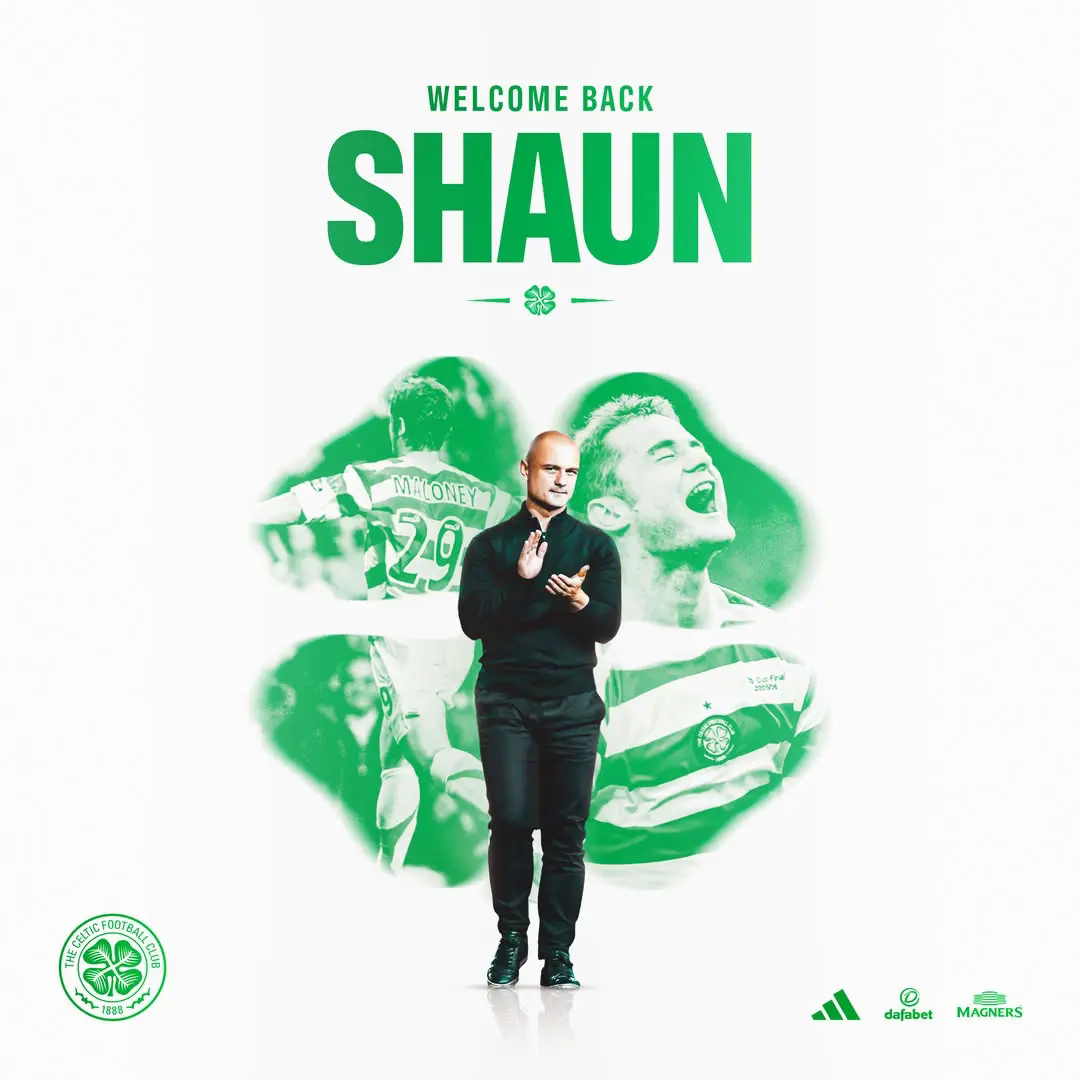
The return of Shaun Maloney.

I'll make it clear that I like Shaun and respect what he has achieved in football. I have nothing whatsoever against him or his appointment as "professional player pathway manager".

And change was evidently needed in that department. In recent years, Celtic's youth development has been like a production line with nobody to man the end of the conveyor belt, while talent was whisked off by opportunistic clubs offering baubles and big dreams.

As with most things, that led to all manner of finger-pointing within the development setup as well as the manager "not giving youth a chance".

That's another conversation but there can be little doubt that Shaun, with his CV including coaching Belgium under Roberto Martinez while the country was ranked 1st in the world, has huge talent and experience to bring to the role.

But are we being told the full story?

This isn't the first time that Celtic have appointed Shaun to a similar role. The previous occasion was in 2017 when the first-team coach was... Brendan Rodgers.

Of course, things were different then. At that time, Peter Lawwell was CEO, not chairman of the board, as he is now.

There are those who will tell you that anyone who thinks the Chairman directly influences policy doesn't understand business.

Those people, in my humble opinion, are either liars or fools. You can forget about the extent and limitations of the remit of an executive role when personal relationships are at play.

Celtic tried an outsider as CEO - Dominic Mackay lasted approximately two months before he left in mysterious circumstances, only for insiders at Celtic to brief against him for failing to take Lawwel's advice in the transfer market.

That caused a ripple of disquiet before Ange started exciting us with some sensational football and issues like club governance seemed too dull to consider.

But Shaun, like John Kennedy and Gavin Strachan, is very much an insider with key members of the board.

Unlike most clubs, the Celtic board have kept an iron grip on the coaching team for years, with the core being board appointees, rather shaped by changing managers.

There can be a lot to be said for the stability that brings, especially with little interest in retaining ambitious managers, but it's also a strategic bargaining chip when dealing with those same head coaches.

It means that replacing the head coach is a relatively simple logistical task and that weakens the hand of someone like Brendan Rodgers, when the prospect of a new contract arises.

I'll come straight out and say it - I believe that's the main reason for Shaun's appointment.

"You want guarantees over quality signings and control over who comes in? Well, we've got alternatives to you already in place."

Many will dismiss this as nonsense but, from a strategic point of view, Celtic have coaching team in place, that could be headed by Shaun "on an interim basis" at the drop of a bunnet.

Add in the prospect of the up-and-coming Ayr United boss Scott Brown or - gawd help us - the ever-available Dunfermline boss Neil Lennon - and you have the sort of continuity options that would require Peter Lawwel to have his sheets changed.

Is that a coincidence, as there are again hints that signings have been brought in without the enthusiastic support of Brendan?

Do key members of the board want him to stay?

All will be revealed by the end of the season but you can be sure that those who refuse to communicate with the fans directly already have their PR ready for when he next "abandons" us.

Imagine starting season 2026-27 with the dream team: Head coach, Shaun Maloney; assistant manager, Scott Brown; team coaches, John Kennedy, Gavin Strachan; Direct of Football, Neil Lennon - all happy to work within the existing recruitment strategy.

The only downside is, of course, that Shaun's forays into management have been less than stellar.

But, of course, should he fail, Scott could step up "on an interim basis", with Neil as "a safe pair of hands".

It all makes perfect corporate sense.

Monday, January 27, 2025

Farewell to Kyogo, welcome back, Jota - and the prodigal son’s return?

Celtic fans are no strangers to the emotional bagatelle that comes with supporting the club. 

This week, however, has been a particularly bittersweet ride. The news of Kyogo’s departure to Stade Rennais has left many of us with a lump in our throats, while the return of Jota from the same club has sparked joy and optimism. 

It’s a strange feeling, akin to welcoming one family member home from abroad, only to watch another pack their bags, perhaps never to return.  

Kyogo’s time at Celtic has been special - at times, nothing short of magical. His energy, relentless work rate and world-class finishing combined with his humility and evident joy in playing in the Hoops to make him an easy player to love - and most of us still do.

Comparisons to Henrik Larsson are not made lightly, but Kyogo’s goals return and range of finishes put him in that rarefied air. He wasn’t just a goal scorer; he was a symbol of Ange Postecoglou’s revolution, a player who embodied the attacking, fearless football that brought excitement, trophies and great memories.  

It’s hard to begrudge Kyogo his move, if that's what he has to do to have a chance of potentially securing a spot in Japan’s World Cup squad.

But, personally, my instinct is that this move might not work out as he hopes. Stade Rennais, having dropped into the relegation places in Ligue 1, have struggled to get the best out of Jota, and their chaotic season doesn’t inspire confidence. We can only wish Kyogo well and hope he finds the success he deserves.  

On the flip side, the return of Jota is giving most of us the warm and fuzzies and feels like an encouraging sign that Celtic are not just a selling club but one capable of attracting players of his quality and price bracket.  

What’s even more impressive is the financial acumen behind the deal. To have made a profit in the region of £8 million over various transactions involving Jota, while still securing his services for five and a half years, is exceptional business. 

However, Jota’s return comes with a caveat. As Callum McGregor often says, there’s “zero credit in the bank.” Jota will need to hit the ground running, proving that he’s not just here to relive past glories but to create new ones. The same applies to Kieran Tierney, should his much-anticipated return materialise.

Speaking of KT, the prospect of his return feels like something that should happen, even if some reasonably question his ability to remain free of injuries. 

For me, like many others, KT never felt like he stopped being “our Bhoy” and if he does come back, it will feel like a longed-for return for a player who was only ever studying away from home.  

Yet, like Jota, Tierney will need to approach his return with the "zero credit " mindset and I have confidence that both can make it work.

The experiences of Jota and KT, along with the recent struggles of Ange Postecoglou at Tottenham, serve as a reminder that life outside Celtic Park isn’t always the promised land. (You can't get greener than Celtic!)

James Forrest has often spoken about ex-teammates who regretted leaving Celtic, and their experiences should serve as a cautionary tale, for all the allure of bigger leagues and bigger paychecks.  

Perhaps the most encouraging takeaway from this transfer window is the growing sense that Celtic are positioning ourselves as a club to come back to, for players in their peak years, rather than a stepping stone to “higher things” or a place to enjoy a pre-retirement sojourn.

There have been false dawns before, but just maybe, there has been a mentality shift and Celtic are on the way up.